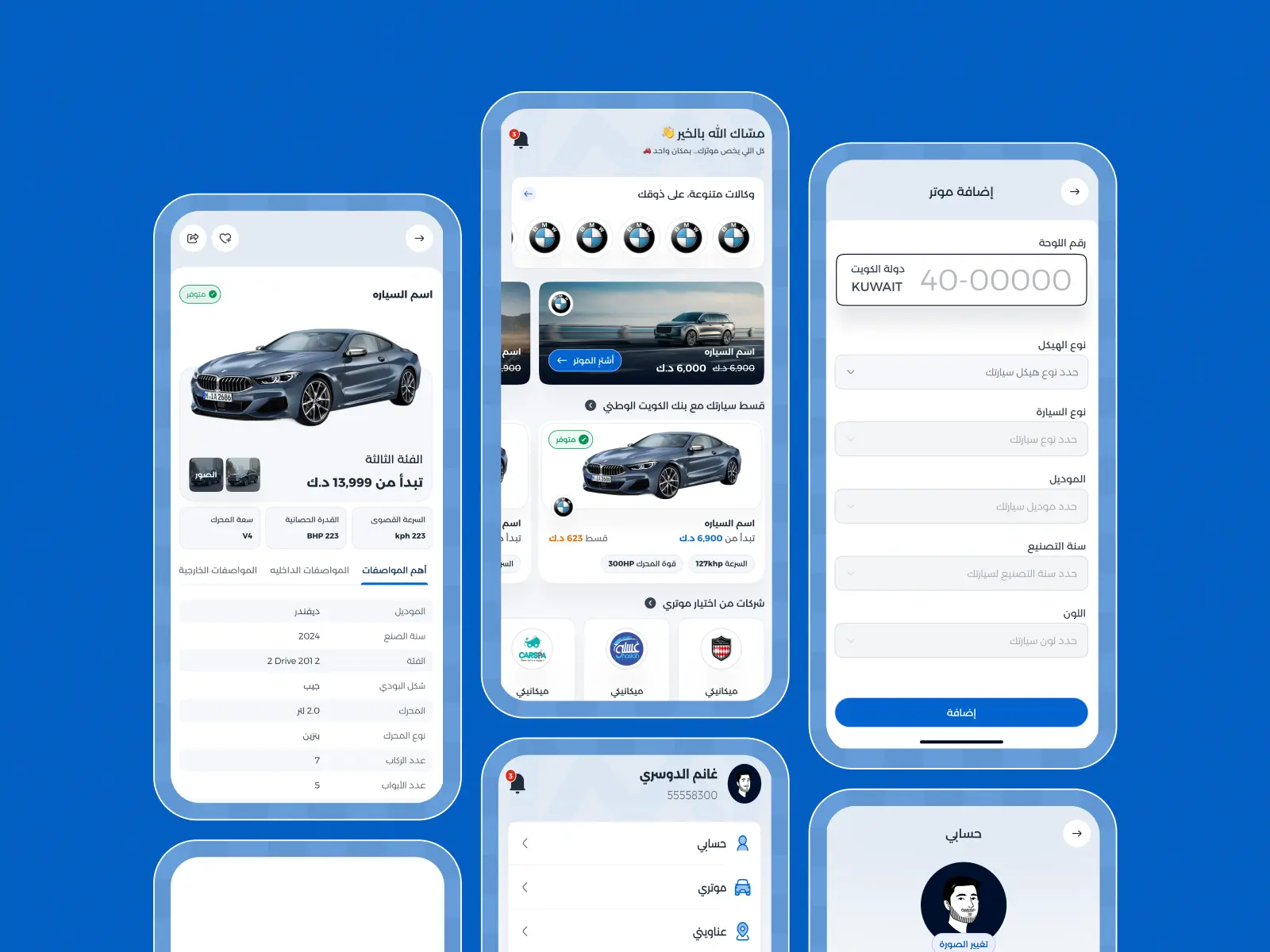
The situation
Motery is a marketplace for cars and car services — bringing together people buying, selling, and servicing vehicles with the businesses that serve them.
The business model worked. The interface didn't keep up with it. Screens had accumulated over time rather than being designed as a whole, and marketplaces punish that more than most products: two different audiences, two different sets of needs, and one interface trying to serve both without a plan.
Sprint's engagement here was focused and specific: design. Not development, not strategy — a complete UI/UX overhaul of the product.
How we worked
Every Sprint design engagement runs on the same three-phase method — Evidence, Architecture, System. What changes is the question each phase has to answer. For Motery, every question had to be asked twice: once for the buyer, once for the business.
Phase 1 — Evidence: two audiences, one interface
We walked both sides of the marketplace end to end. How someone searches for a car, compares options, and books a service. How a dealer or workshop lists inventory, manages enquiries, and responds. Mapping them side by side made the real problem visible: the two journeys had been built at different times, and in several places they were quietly working against each other.
Delivered: dual-journey maps, friction inventory for both sides, evidence-based personas.
Phase 2 — Architecture: decide who each screen belongs to
In a two-sided marketplace, most interface problems are ownership problems — a screen trying to serve a buyer and a seller at once serves neither. So before designing anything, we rebuilt the information architecture around that single question. Browsing and search were restructured around how people actually shop for a car or a service. Listing and management flows were rebuilt around how a business actually operates. Wireframes covered the full product, both sides, not just the headline screens.
Delivered: information architecture for both sides, full wireframe set, clickable prototype.
Phase 3 — System: a design language built to grow
Marketplaces don't stay still — categories get added, services get added, and that's exactly when an interface starts to drift. So we didn't hand over screens. We built a design system: typography, colour, spacing, components, and every state each component can hold. Every screen was then assembled from it.
Delivered: design system, full UI across both sides of the marketplace, developer handoff files.
That's the part that outlasts the project. Abdullah's team can add a category next year and it will still look like Motery.
The outcome
Motery came out of the engagement with a product that looks like what it is, and a design system the team can keep building on without the interface drifting apart again.
Sprint's role here was design. The redesign supported the growth that followed — but that growth belongs to Abdullah and his team.