
Most companies in Kuwait have heard of design thinking. Many have run a workshop. Few can point to a product, service, or process that changed because of it.
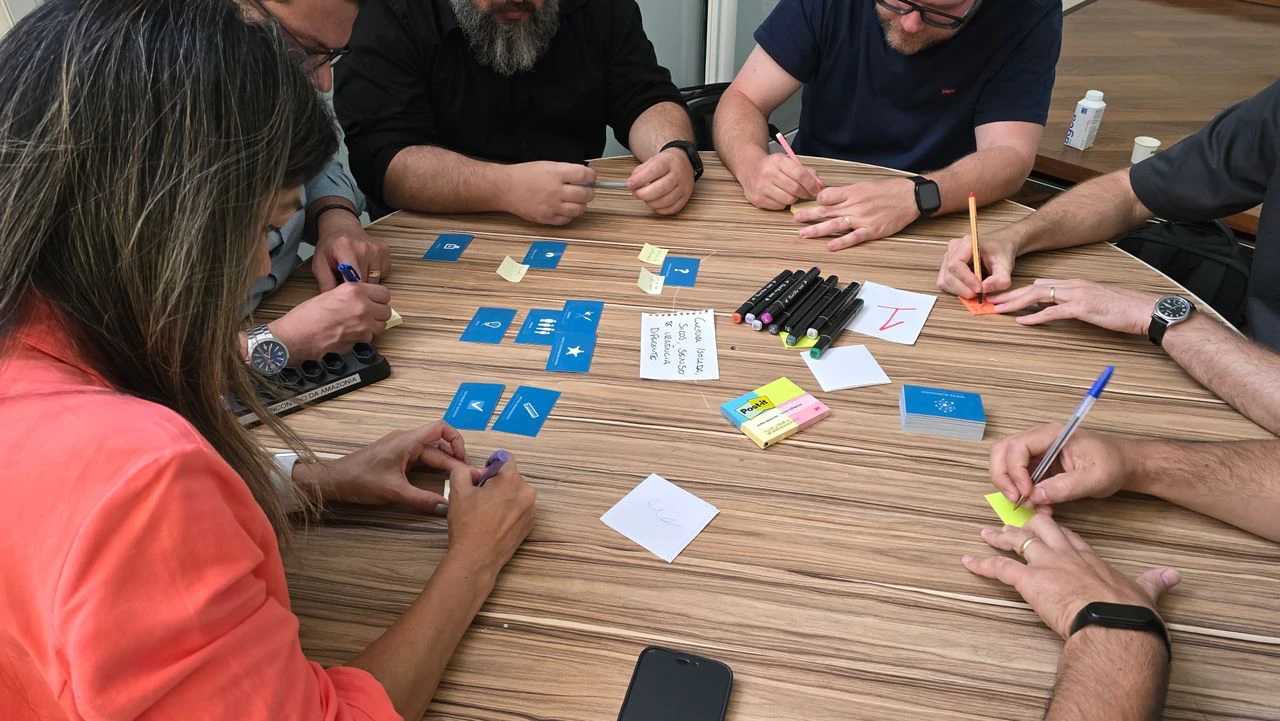
That's not a failure of the method. It's a failure of how it's applied: one energetic day, a wall of sticky notes, a nice photo for LinkedIn — and then everyone goes back to doing things exactly as before.
This guide explains what design thinking actually is, how each phase works, and how to use it so it produces decisions, not decorations.
What Is Design Thinking?
Design thinking is a human-centered problem-solving method. It starts with the people who experience a problem, not with the solution a team already has in mind.
Its core idea is simple: most expensive mistakes happen because companies solve the wrong problem very well. Design thinking forces you to understand the problem deeply before you commit budget to fixing it.
It is NOT a brainstorming session, a creativity exercise, or a one-day event. It's a structured process with clear outputs at every stage.
Why It Matters for Companies in Kuwait
Customers are close — but rarely asked. In a market of around 4.9 million people, your customers are a phone call away. Yet most decisions are still made in meeting rooms based on what management assumes customers want.
Digital expectations are high. Kuwaiti customers compare every service to the best apps they use daily. A bank, a ministry, or a retailer is no longer judged against competitors — it's judged against the best experience the customer has ever had.
Kuwait Vision 2035 is pushing transformation. Banks, government entities, and large family businesses are under pressure to innovate. Design thinking gives that pressure a method instead of a slogan.
The 5 Phases of Design Thinking
1. Empathize — understand the people. Talk to real users. Observe how they behave, not just what they say. Tools like empathy maps, user interviews, and stakeholder maps turn conversations into structured insight. Ten honest interviews beat a 500-response survey.
2. Define — frame the right problem. Turn what you learned into a clear problem statement. The most useful format is the "How Might We" question: "How might we help first-time borrowers understand their repayments before they sign?" A well-framed problem is half the solution.
3. Ideate — generate many options. Now, and only now, you generate solutions. Structured methods like Crazy 8s, 6-3-5 brainwriting, or Six Thinking Hats produce far better ideas than an open "any ideas?" discussion — and they stop the most senior person in the room from dominating.
4. Prototype — make it real, cheaply. Turn the best ideas into something people can react to: a storyboard, a concept poster, a clickable mockup. A prototype should cost hours, not months.
5. Test — learn from real reactions. Put the prototype in front of real users and watch. What confuses them? What excites them? What would they pay for? Every test either strengthens the idea or saves you from building it.
These phases aren't a straight line. Testing often sends you back to redefine the problem. That's the method working, not failing.
Where Kuwaiti Companies Use Design Thinking
- Banks: redesigning onboarding, lending journeys, and digital channels around real customer pain.
- Government entities: simplifying services that citizens find slow or confusing.
- Retail and F&B: finding why customers drop off — and what would bring them back.
- Internal processes: fixing approval chains, HR journeys, and employee experience.
- New ventures: validating a new product idea before committing a build budget.
Why Most Design Thinking Workshops Fail
- No real users involved. Employees role-playing customers is not empathy research.
- Jumping straight to ideas. Skipping Empathize and Define produces confident solutions to imaginary problems.
- No decision owner in the room. If nobody can approve the next step, the output dies in a slide deck.
- No budget for what comes next. A workshop without a path to prototype and test is theatre.
How to Run Design Thinking the Right Way
1. Start with a real business challenge, not "let's be innovative." A specific problem with a specific owner.
2. Run it as a program, not an event. A focused multi-week sprint — research, framing, ideation, prototyping, testing — produces evidence. A single day produces enthusiasm.
3. Mix the team. Business, technology, frontline staff, and real customers. Diversity of perspective is where good ideas come from.
4. End with a decision. Every program should finish with a clear go, pivot, or stop — backed by what users actually did.
Ready to Apply Design Thinking in Your Organization?
Sprint Innovation is Kuwait's innovation partner for corporates and founders. We run design thinking programs for companies and founders — from user research to tested prototypes — and we stay to build what proves itself.
Book a free 30-minute consultation and we'll help you frame your challenge and choose the right format for your team.