
Walk into almost any large organization in Kuwait today and you'll find an innovation initiative: an idea competition, an innovation lab, a hackathon, or a partnership with an accelerator.
Ask what reached customers in the last 12 months, and the room usually goes quiet.
The ambition is real. The budgets are real. But most corporate innovation programs are designed to generate ideas — not to turn ideas into products, revenue, or measurable change. This guide explains why that happens and how to design a program that actually delivers.
What Is Corporate Innovation?
Corporate innovation is how an established organization creates new value beyond its current business: new products, new services, new business models, or radically better ways of serving existing customers.
It usually takes three forms:
- Core innovation: improving what you already do — faster onboarding, better digital channels, simpler processes.
- Adjacent innovation: extending into nearby markets or customer segments.
- Transformational innovation: building entirely new businesses, often as separate ventures.
Most organizations need all three, in different proportions. Most programs only plan for the first.
Why Corporate Innovation Matters Now in Kuwait
Fintechs and regional players are moving fast. Digital banks and super-apps across the GCC are setting new customer expectations every quarter.
Regulators are opening the door. Sandbox programs and digital licensing frameworks make it possible to test new models that weren't allowed a few years ago.
Talent wants to build. Young Kuwaiti employees increasingly want to work on new things. An organization that can't offer that loses its best people to startups.
6 Reasons Corporate Innovation Programs Fail
1. Ideas without owners. Idea competitions collect hundreds of submissions. Nobody is assigned, funded, or measured to take the winners forward.
2. Events instead of pipelines. A hackathon is a weekend. Innovation is a process that runs all year, with stages, gates, and budgets.
3. Skipping customer validation. Ideas are judged by committees based on how good they sound, not on evidence from real customers.
4. No path to build. Even validated ideas stall because IT backlogs are full and procurement takes six months to hire a vendor.
5. Wrong success metrics. Counting ideas submitted or workshops held measures activity. What matters is experiments run, products launched, and value created.
6. Antibodies. Existing departments see new initiatives as threats to their budgets or processes. Without senior sponsorship, the organization quietly rejects anything new.
What Successful Programs Do Differently
They start from strategic challenges. Instead of "send us your ideas," they ask focused questions tied to business goals: "How might we serve customers under 25 who never visit a branch?"
They use a staged funnel. Many ideas enter, few leave. Each stage — discover, validate, build, scale — has clear criteria and a small budget that grows only with evidence.
They validate before they build. Design thinking and customer interviews filter out weak ideas in weeks, at a fraction of the cost of development.
They have a build engine. An internal team or an external partner that can turn a validated concept into a working MVP in weeks, not quarters — outside the normal IT backlog.
They measure outcomes. Revenue, cost saved, customers acquired, time-to-market. Not attendance.
A Practical Innovation Model for Kuwaiti Organizations
- Frame 3–5 strategic challenges with executive owners.
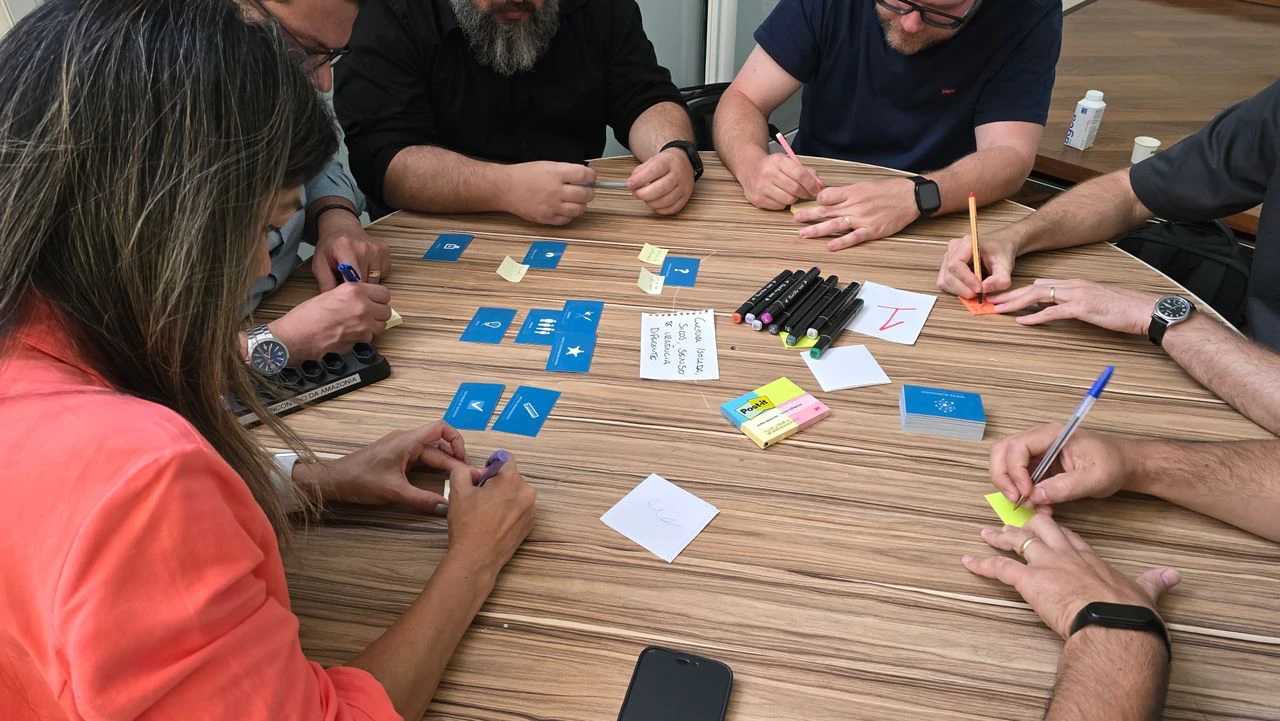
- Discover through design thinking sprints with real customers and frontline staff.
- Validate the strongest concepts with prototypes and real user testing.
- Build an MVP for the concepts that pass — with a dedicated team, outside the core backlog.
- Decide to scale, integrate into the core business, spin out, or stop.
The last step matters most. Stopping a weak idea early is a success, not a failure. It's money you didn't burn.
Build Internally or Partner?
Most Kuwaiti organizations don't have the product, design, and startup-building skills in-house — and hiring them takes time. A practical model is a hybrid: internal owners and sponsors, with an external partner who brings the methodology, runs validation, and builds MVPs. Over time, the internal team learns the process and takes more of it in-house.
Ready to Turn Innovation Into Outcomes?
Sprint Innovation is Kuwait's innovation partner for corporates and founders. Through our Corporate Innovation and MVP Factory programs, we help banks and large organizations move from ideas to validated, launched products.
Book a free 30-minute consultation — we'll review your current innovation setup and show you where ideas are getting stuck.