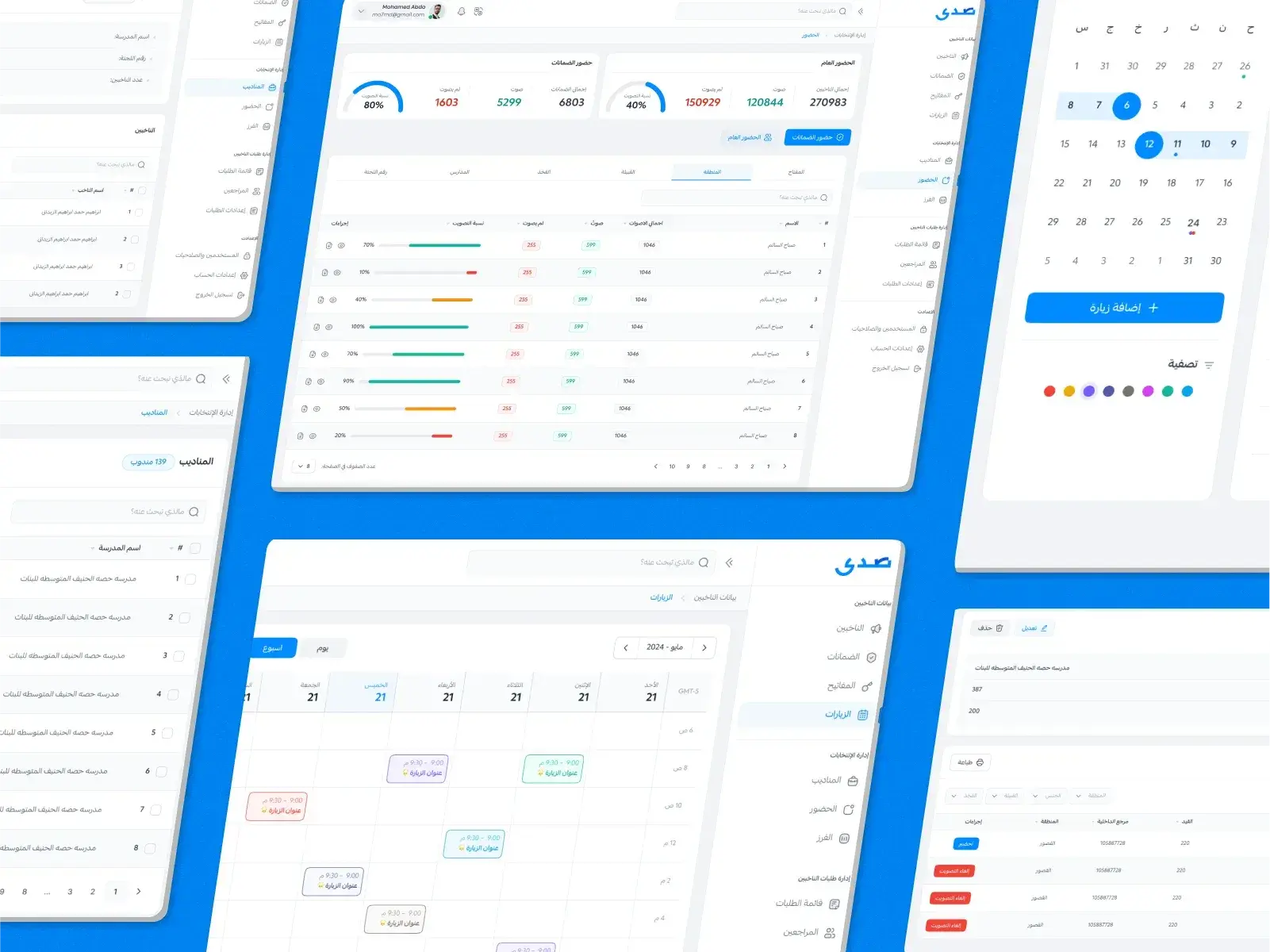
The situation
Election campaigns run on coordination. Representatives need to register attendance, teams need to know where their people are, and organisers need lists that stay accurate while thousands of things change at once.
The tools available did the job until election day — and then fell over, exactly when failure costs the most. Sada was built to solve the version of the problem nobody else had solved: scale under concentrated, unforgiving load.
Sada was Sprint's own venture, built and operated in-house.
How we built it
Phase 1 — An MVP that tested the concept
We released the smallest thing that could prove the idea: simple pages where representatives register attendance and immediately see which committee they vote at, with printable reports for distribution. Enough to learn from, cheap enough to be wrong about.
Phase 2 — Direct selection from any device
The MVP worked, so we deepened it. Influencers could now interact with the database directly, view individuals in the system, and make selections from their phones. Sada stopped being a set of pages and became a real application, usable anywhere.
Phase 3 — Agent roles and oversight
We added a dedicated role for school agents, giving them the ability to monitor representative performance and movement in real time. Each release was shaped by what campaigns actually asked for during live use.
The technical problem worth talking about
Election traffic is not normal traffic. It arrives all at once, in a window measured in hours, and there is no second chance. This is precisely where competing platforms broke.
We treated scalability as an architecture decision rather than an optimisation to do later — choosing MongoDB, Node.js, and Redis specifically for the read and write patterns an election day produces, and designing the infrastructure around peak load rather than average.
The outcome
Sada served 49 election campaigns over its lifetime, ran 22 of them simultaneously at peak, held stable across three consecutive election cycles, and recorded zero downtime events under full load.
The lesson carried into everything Sprint has built since: infrastructure decisions made at the start are the ones you can't retrofit.